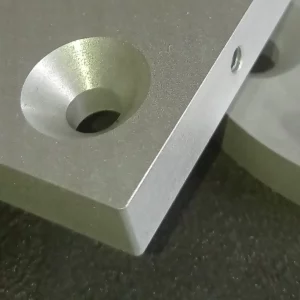
DESIGN TIPS FOR LOW-COST 2D CNC MILLED PARTS

Design your aluminium part so it can be manufactured online faster, more cost-effectively and more reliably.

✓ less milling time
✓ fewer special cases
✓ better online calculation
✓ lower manufacturing costs

UPLOAD STEP FILE

SIMPLE GEOMETRY = LOWER-COST MILLED PART

The fewer setups, small inside radii and special features your part needs, the faster it can be manufactured.

✓ prefer single-sided machining
✓ plan large inside radii
✓ use standard thicknesses
✓ avoid unnecessary fillets/chamfers
✓ use side and double-sided features only when functionally necessary

IS YOUR PART SUITABLE FOR THE ONLINE CALCULATOR?

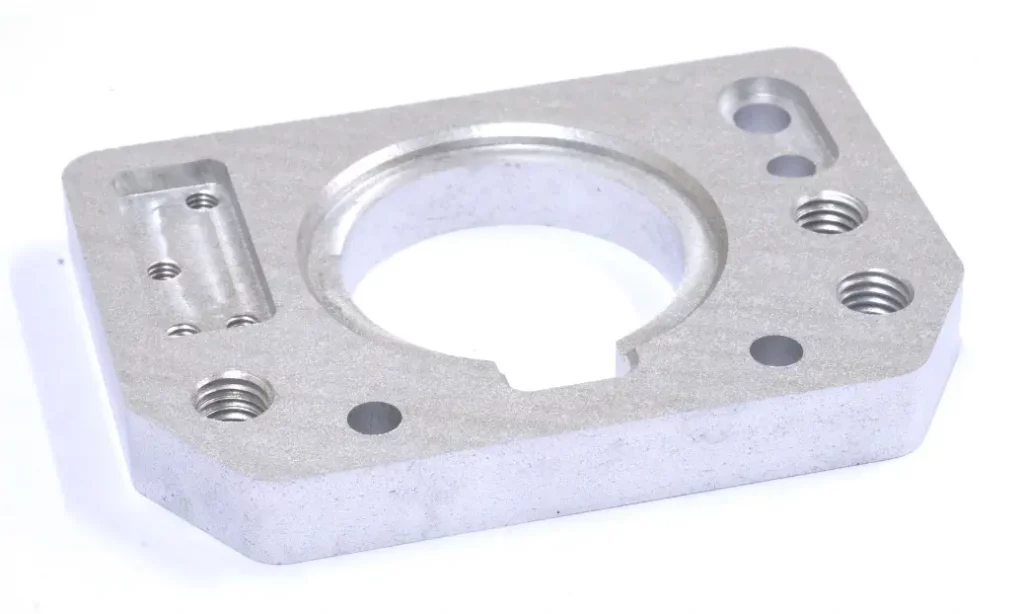
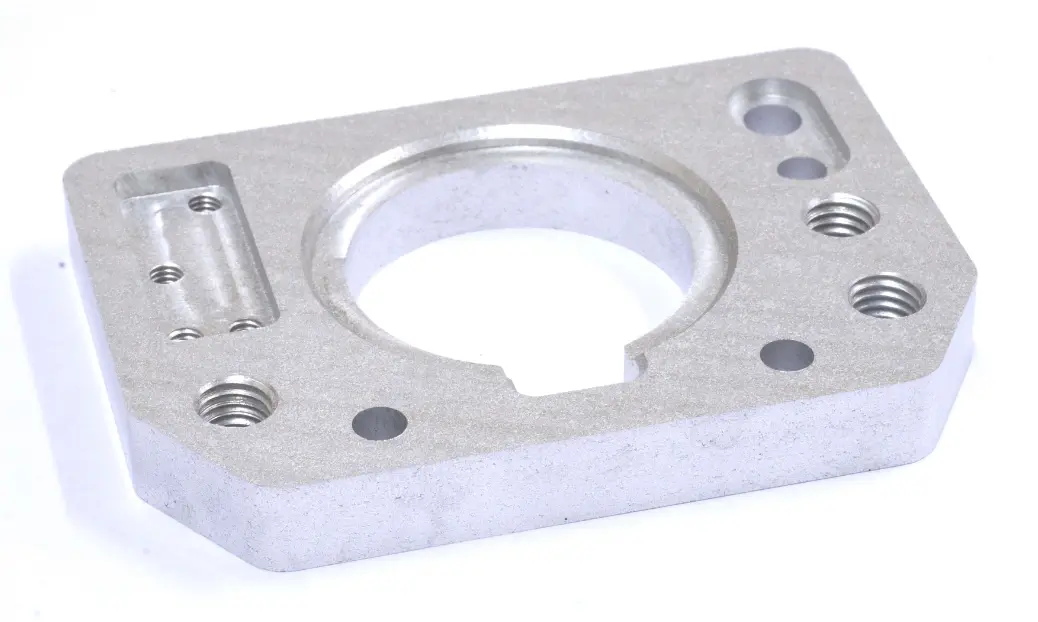
Ideal: single-sided 2D CNC parts

Plates, brackets and adapters with contours, holes, pockets, threads and fits.

Can be calculated directly online.

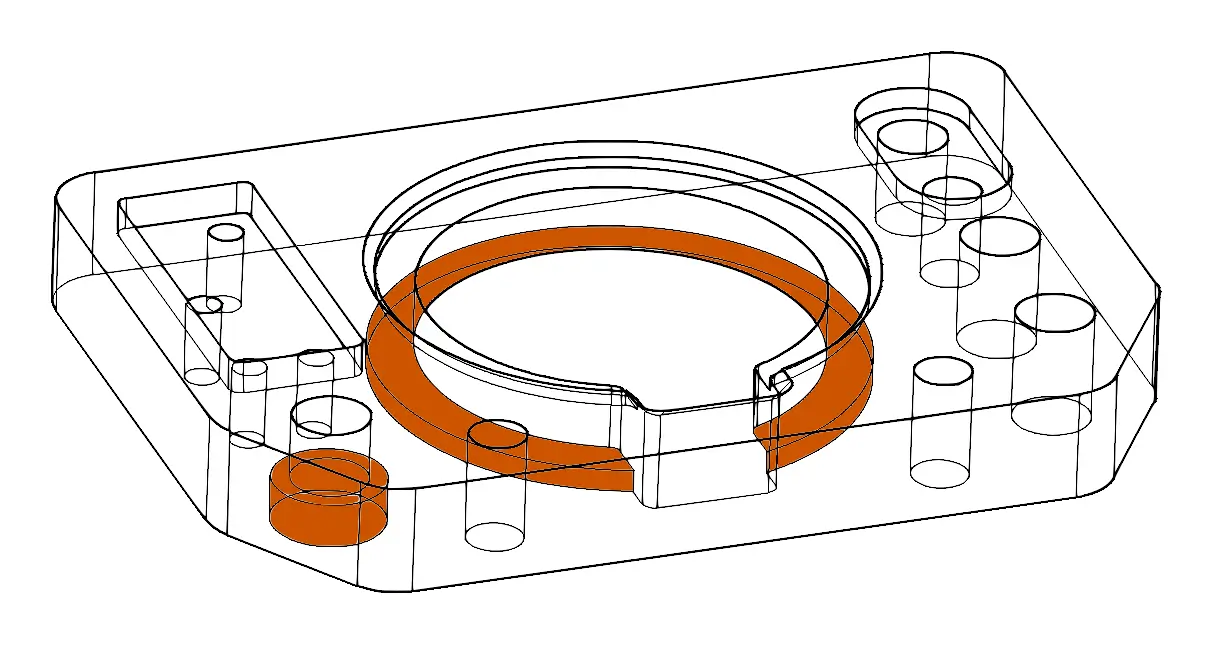
On request: double-sided machining

Machining on the front and back side is possible, but must be checked manually.

Quote by email.

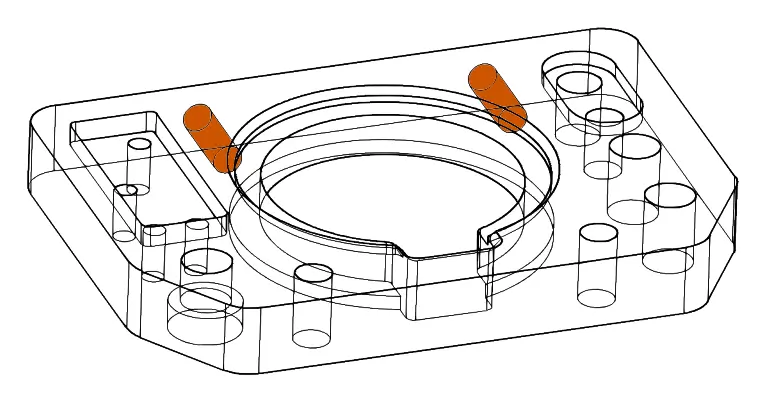
On request: side holes

Side holes, side threads and side fits are possible if they are accessible.
Quote by email.

Surcharge for single pieces:
€2 per hole, €4 per thread.


THE 5 RULES THAT REDUCE YOUR PRICE THE MOST

RULE 1: Design for single-sided machining where possible

Single-sided 2D CNC parts are the lowest-cost option because several parts can be manufactured in one setup.

RULE 2: Prefer inside radii ≥ 4 mm

Large inside radii reduce milling time and tool changes. Small inside radii are possible, but take more time.

RULE 3: Use standard material and standard thicknesses

5083 and 7075 from stocked plates enable stable pricing and shorter lead times.

RULE 4: Use threads, fits and chamfers only where they are functionally necessary

Every additional feature increases machining time and inspection effort.

RULE 5: Do not upload complex 3D/5-axis geometries

The calculator is built for 2D/2.5D aluminium parts, not for freeform surfaces or complex 3D components.

PART SIZES AND MATERIAL THICKNESSES

The online calculator checks these limits automatically.

✓ minimum size: from 20 × 20 mm
✓ maximum format: 950 × 450 × 20 mm
✓ material: aluminium 5083 or 7075
✓ solid models only as STEP/STP
✓ no mesh/surface models

Aluminium 5083

Aluminium cast tooling plate 5083, precision milled on both sides, perfectly suited for mechanical engineering parts

Stocked thicknesses, face-milled on both sides: 5, 6, 8, 10, 12, 15, 20 mm

Stocked sheet thicknesses, rolled: 2, 3, 4 mm

Mechanical properties* Value
Yield strength Rp0.2 [MPa] ≥ 125
Tensile strength Rm [MPa] ≥ 270
Elongation at break A50 [%] ≥ 15
Brinell hardness 70

*detailed properties in the material data sheet

5083 data sheet
Aluminium 7075

High-strength aluminium rolled plate 7075 T651, perfectly suited for high strength requirements

Stocked thicknesses, face-milled on both sides: 10, 15, 20 mm

Stocked sheet thicknesses, rolled: 5, 6, 8, 12 mm

Mechanical properties* Value
Yield strength Rp0.2 [MPa] ≥ 440
Tensile strength Rm [MPa] ≥ 525
Elongation at break A50 [%] ≥ 6-8
Brinell hardness 140

*detailed properties in the material data sheet

7075 data sheet

INSIDE RADII: LARGE RADII SAVE MONEY

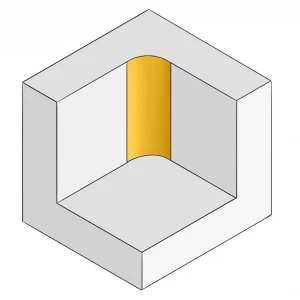
Sharp inside corners are technically impossible in milling. The smaller the inside radius, the more milling time is required.

For low-cost parts, plan an inside radius ≥ 4 mm.

Material thickness 6 mm → minimum inside radius 0.6 mm

Material thickness 10 mm
→ minimum inside radius 0.8 mm

Material thickness 20 mm
→ minimum inside radius 1.6 mm

Minimum radii are possible, but they are not the lowest-cost option.

DESIGNING HOLES, THREADS AND FITS CORRECTLY*

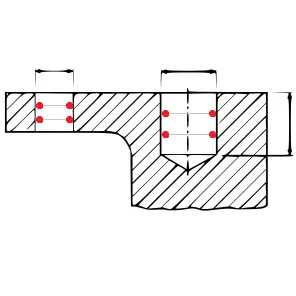
Holes are drilled or milled depending on their diameter.

FITS:
Fits from Ø 2–30 mm can be reamed as H7.
Larger fits are milled and typically manufactured as H9.

THREADS:
Metric threads M3–M12 are possible.

Possible milled thread depth:

  • M3–M4: up to 10 mm deep
  • M5–M10: up to 15 mm deep
  • M10–M12: up to 20 mm deep

IMPORTANT:
Create the core hole in the model; do not model the thread. Please disable modeled threads before STEP export.

SPECIAL FEATURES: POSSIBLE, BUT MANUAL CHECK REQUIRED

DOUBLE-SIDED MACHINING:
Possible for parts with machining on the front and back side.
Checked and quoted manually.

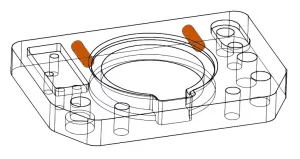
SIDE HOLES:
Possible up to 20 mm depth, provided the hole is accessible in the setup.
Typical surcharge: €2 net per hole and €4 net per side thread or fit.

DO NOT MODEL EVERYTHING THAT IS NOT FUNCTIONALLY NECESSARY

EDGE BREAK:
All parts receive a standard mechanical edge break of approx. 0.1 mm.

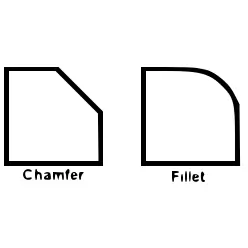
CHAMFERS:
Larger chamfers up to approx. 0.3 mm are possible if functionally necessary.

ENGRAVINGS/TEXT:
Only include them if technically necessary. Engravings are possible from a minimum width of 1.1 mm.

RECOMMENDATION:
Leave out unnecessary visual features if the price should stay low.

WHAT YOU CAN EXPECT FOR SURFACE FINISH AND TOLERANCES

TOLERANCE:
Typically ±0.05 mm per 100 mm.
Guaranteed ±0.1 mm per 100 mm at room temperature.

SURFACE:
Mechanically deburred, chemically finished and cleaned.
Minor milling marks, discoloration or superficial scratches may occur for technical process reasons.

NOTE:
If a surface is functionally critical, mark or describe it in the order.


THESE MISTAKES MAKE PARTS EXPENSIVE OR NOT CALCULABLE ONLINE

✕ uploading complex 3D/5-axis shapes
✕ unnecessarily small inside radii
✕ modeled threads instead of core holes
✕ surface models instead of solid models
✕ unnecessary engravings and visual chamfers
✕ side features without a manual request
✕ material thicknesses outside stocked plates

PART DESIGNED? THEN CHECK THE PRICE ONLINE.

Upload your STEP file and see directly whether your 2D CNC milled part can be calculated online.

Upload STEP file